Briefing · Read News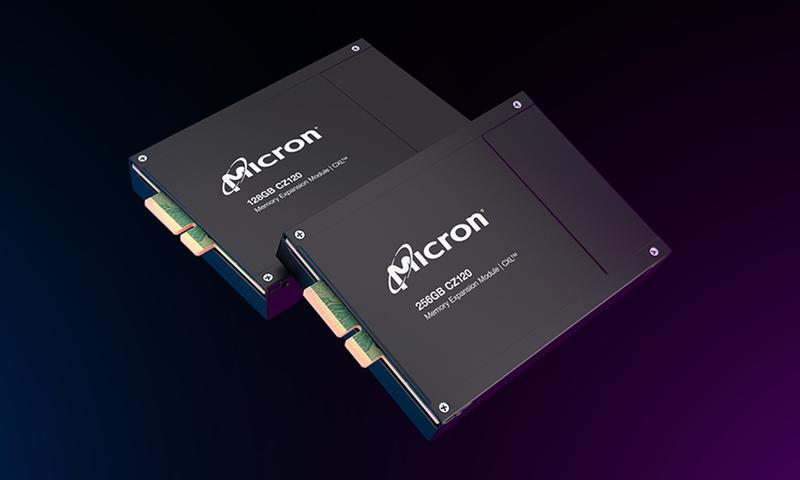
October to December has been the best time of the year for Micron Technology ( MU -3.88% ) shareholders. From 2016 through 2025, the memory maker's shares climbed about 19% on average in the fourth quarter, based on quarter-end closing prices. That average is almost twice its second-best quarter, the January-to-March period, at about 10%.
And the stock finished higher in seven of those 10 fourth quarters. This year's fourth quarter is off to a weak start, though. Shares are near $983 as of this writing, down about 8% from their Sept. 30 close and about 19% under their record close of $1,213.56 on June 25.
A calendar pattern on its own isn't a reason to buy a stock. But Micron's fourth-quarter history seems to track which way the memory cycle is heading. And this year, I think the picture looks far more like the good years than the bad ones.
Image source: Micron. When the pattern broke The three years the shares didn't climb were years when Micron's business was weakening. In 2018, the stock sank around 30% in the fourth quarter, most of it ahead of Micron's Dec. 18 report.
When it did report, CEO Sanjay Mehrotra cited "weak near-term industry supply-demand dynamics entering calendar 2019." In 2022, shares edged down 0.2% as fiscal first-quarter revenue fell 47% year over year to $4.09 billion, and management's guidance for the next quarter was even lower, at around $3.8 billion. In 2024, the stock dropped around 19% even though Micron posted record quarterly revenue of $8.71 billion. Its forecast for the following quarter was around $7.9 billion, and almost all of that quarter's decline came after the Dec. 18 report.
Back then, Mehrotra said "consumer-oriented markets are weaker in the near term." Granted, a lower outlook wasn't automatically a bad sign. Micron guided lower in December 2019, too, but it said it was optimistic its fiscal second quarter would be "the cyclical bottom." Shares climbed about 25% in the last three months of 2019. Micron's next report still matters as a checkpoint.
Its fiscal first quarter ends in late November or early December, and the company has usually reported it in December -- last year's report was on Dec. 17. As 2024 showed, a soft outlook there might break the pattern late in the quarter. Memory prices are still rising, just more slowly This year's business looks nothing like those years.
Micron's revenue for its fiscal fourth quarter of 2026 (the 14-week period ended Sept. 3, 2026) hit a record $54.2 billion, up 379% from a year earlier, and management expects about $61.5 billion for fiscal Q1. Micron says demand driven by artificial intelligence sets it up for a record fiscal 2027. And chief financial officer Mark Murphy said in his prepared remarks that the company expects "sequential revenue growth each quarter." Revenue growth has slowed from fiscal Q3's 74% sequential leap, though.
Fiscal Q4's 31% rise was padded by the extra week. Without that week, revenue climbed about 21%, and the fiscal Q1 forecast suggests a similar rate. Pricing is where the slowdown shows.
In fiscal Q3, Micron said its DRAM prices went up by a percentage in the low 60s from the previous quarter. In fiscal Q4, the gain was in the high teens. Market researcher TrendForce forecasts conventional DRAM contract prices to climb 10% to 15% in the fourth quarter of 2026 compared to the third.
Prices are rising more slowly, not dropping. That's a far cry from the Decembers of 2018, 2022 and 2024, when Micron warned investors of softer conditions. Micron plans to lift its fiscal 2027 capital spending beyond previous plans, with a lot of the increase headed to new cleanroom space.
Still, Mehrotra said the company does "not have line of sight to when supply and demand will return to balance." Premium Feature Moneyball Superscore 91 /100 Today's Change ( -3.88 %) $ -39.96 Current Price $ 989.04 Is the stock a buy before year-end? Investors are paying very little for that outlook. At around $983, shares trade at about 13 times Micron's fiscal 2026 earnings of $74.33 a share.
Using analysts' estimates for fiscal 2027, which started in September, the stock trades at around 6 times earnings . In other words, the stock costs about six years of this year's expected profit. Arguably, it's the sort of price investors normally pay for a value stock , which suggests they expect memory's boom to cool eventually.
Granted, slower price gains are often how a memory cycle starts to turn. And an outlook that hints at flattening demand could break the pattern again. But Micron expects growth in every quarter of fiscal 2027.
I wouldn't buy Micron on the calendar alone. But this year, the company's own outlook points in the same direction as history, and I'd consider buying the stock ahead of its next report -- though only as a small position that leaves room for risk, and with expectations for significant volatility.
Source: The Motley Fool